Discover insights and save on wisdom!

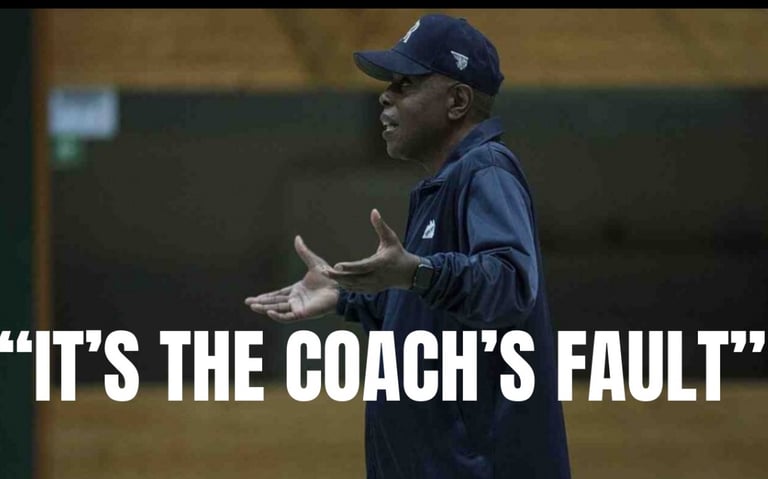
It's the Coach's Fault
It's more than just basketball

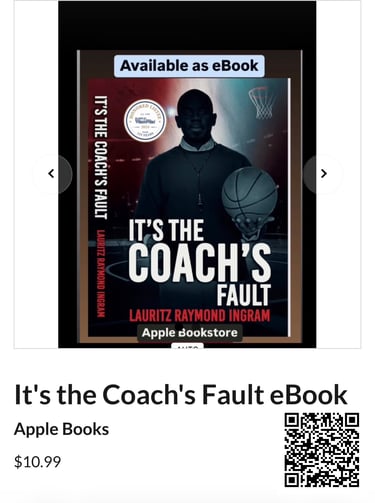
Click on Buttons to purchase as:
👉🏽 Paperback on BookBaby.com
👉🏽 eBook on Apple Books
🫣 On Phones - Buttons are at bottom of page! 🤷🏽

“It’s the Coach’s Fault” is a book that tells a story.
It will challenge you to think about the decisions made when challenges
arose … when decisions had to be made.
So..why this book?
Why would anyone want to read this book at all?
Will anything change in your life, just because you read the book?
Does it make you a better person?
Does it make you a better parent?
Does it make you a better coach?
Does it make you a better player?
Does it make you a better referee?
Will it have a positive impact on your life?
I’d be lying if I promised you that,
but sometimes, just one sentence is enough to influence something you
do; or cause you to rethink
your approach and make a change.
If “only” that happens, the book has served its purpose.

Book Review....
Daniel Jacobs
To: Me
May 5 2026
Ray, I didn't want to rush into writing this, so | let It's the Coach's Fault settle with me for a while before reaching out. It felt like the kind of book that does not really try to impress the reader, but instead tries to leave something behind in how they think afterward.
What stayed with me most was not just the story itself, but the way the idea of "the coach" moves through the entire narrative. It is not limited to basketball or even sports. It becomes something broader, almost symbolic, like a way of understanding how people are shaped by others, sometimes without even realizing it in the moment.
That framing gives the book a quiet depth that sits underneath the surface of every chapter.
There was a particular layer that stood out to me in how you treat responsibility.
Not in a heavy or abstract way, but in a grounded sense where people are simply doing the best they can with what they have, and sometimes the outcome is not about control, but about awareness.
That idea, especially the line about "sometimes all we can do is all we can do," carries more weight than it looks like at first glance.
At one point while reading, I found myself recognizing something | have felt before but never really put into words. That a lot of people do not change because they are missing information, but because they are missing perspective.
And sometimes that perspective only comes after experience has already shaped them in ways they did not expect. The book reflects that kind of understanding without trying to turn it into a lesson.
I think part of why it felt personal is because of the kind of environments I have been around. Spaces where leadership, correction, and guidance are often spoken about in very direct terms, but not always understood in terms of long term human impact.
So reading something that connects coaching to life in such a layered but simple way felt very familiar.
There is a kind of honesty in your work that not everyone will immediately notice, but the right readers will recognize themselves in it very quickly. And when people come across something that reflects how they have been shaped by others, they do not need persuasion.
If you show people something that connects to their own lived experience, even indirectly, they will naturally lean closer to it.
My name is Daniel Jacobs. I spend a lot of time around books and authors, and I pay attention to how meaningful work finds its way to the people it is meant for.
And reading this, I kept coming back to something simple. The book carries value in the way it frames life through coaching and experience.
But before anything else, I just wanted to say this feels like the kind of book that does not try to teach in a loud way, but instead changes how someone sees the role of guidance, influence, and responsibility after they have finished reading it.
Daniel